Travel guide · updated August 2026
Sint Maarten Travel Guide: Best Areas, Beaches & Local Tips
Where to stay, when to go, how to get around and what things cost, from our team on the island.
The island in brief
Why stay in Sint Maarten
Sint Maarten is the rare Caribbean island that genuinely feels like two places at once. The Dutch side runs on US dollars, casinos and the legendary plane-spotting at Maho. The French side runs on euros, fresh croissants and quiet beaches you can have to yourself in February. The unmarked border is a road sign you usually miss the first time you cross it, and a typical week here ends up touching both sides.
For luxury villa travelers the appeal is the mix: 37 beaches, roughly 300 restaurants for a population of 80,000, direct flights from most of the US East Coast, and a villa stock that ranges from intimate honeymoon retreats in Beacon Hill to ten-bedroom estates on Terres Basses. The island is small enough that everything is within a 30-minute drive, and varied enough that you can spend a week on the same villa without repeating a beach or a dinner.
Coral Villas has been matching guests to villas on this island since 2018. We focus on the luxury end of the market: private pools, sea views, gated access, concierge support, and the kind of villa management that gets the dishwasher fixed the same day. Our 83 online villas span the most-requested neighborhoods, from oceanfront properties on Cupecoy and Beacon Hill to architectural estates inside the gated Terres Basses peninsula on the French side.
The page below is the practical guide to choosing where to base your stay, what to expect from each season, how the island layout actually works, and the safety and money basics that catch most first-time visitors off-guard.
Written by the Coral Villas team on Sint Maarten. Last updated August 2026.
The areas, and who they suit
Where you stay shapes the week more than the villa does. These are the areas where we have the most villas.
French side
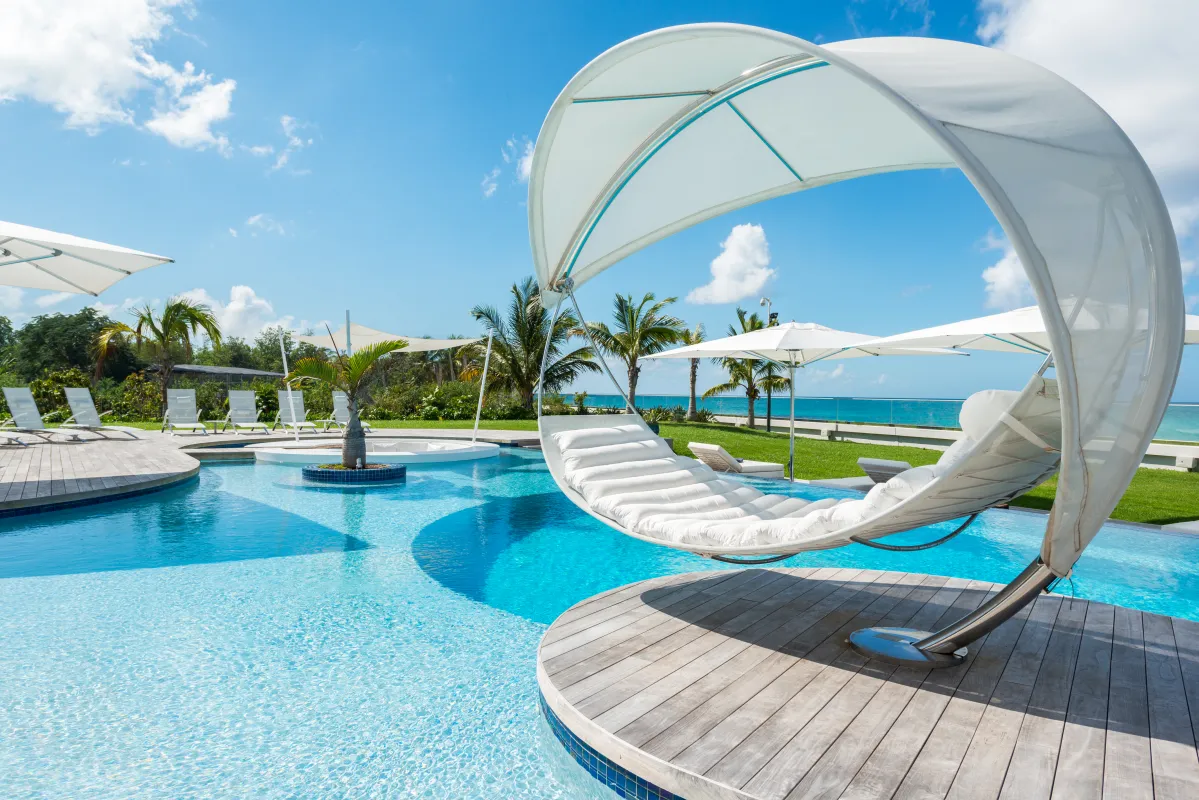
Terres Basses
A gated, low-density peninsula on the French side with large private villas and three quiet beaches: Baie Rouge, Plum Bay and Baie Longue.
47 villas, 15 min to the airport
French side
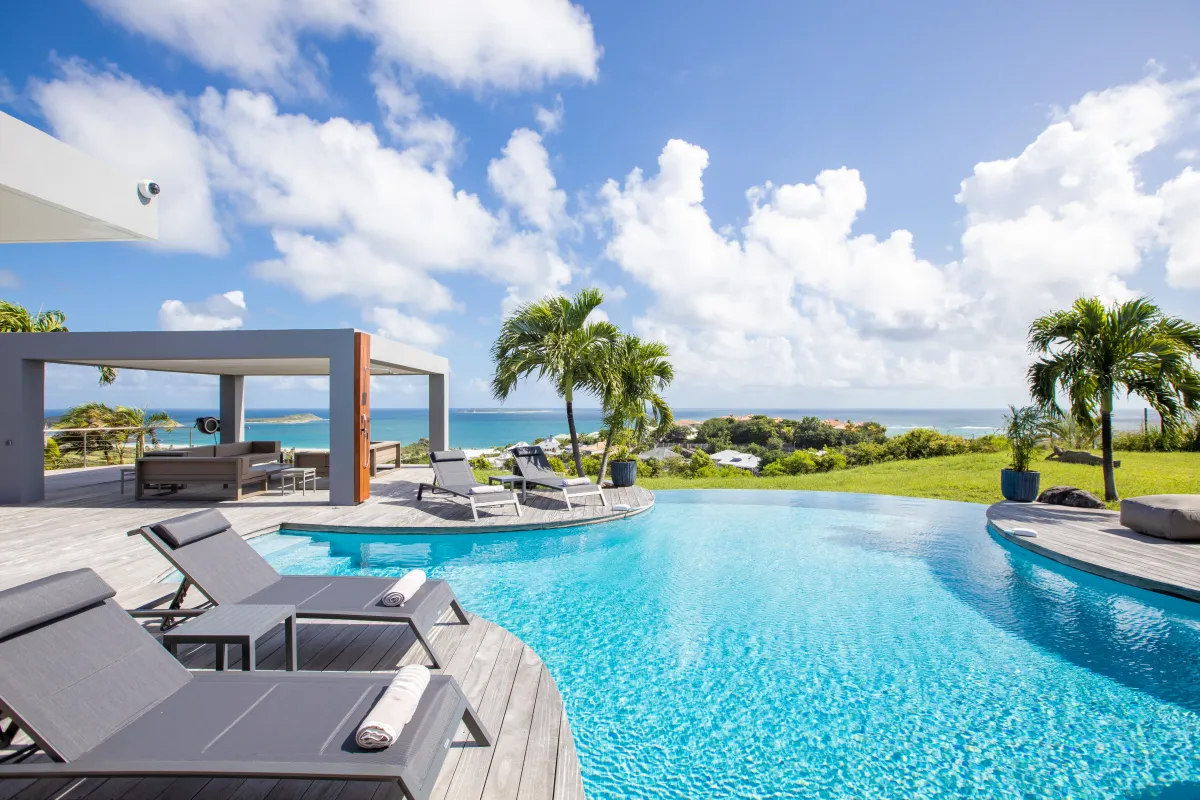
Orient Bay
The long white-sand beach on the Atlantic side, lined with beach clubs, with Pinel Island a short boat ride away.
11 villas
Dutch side
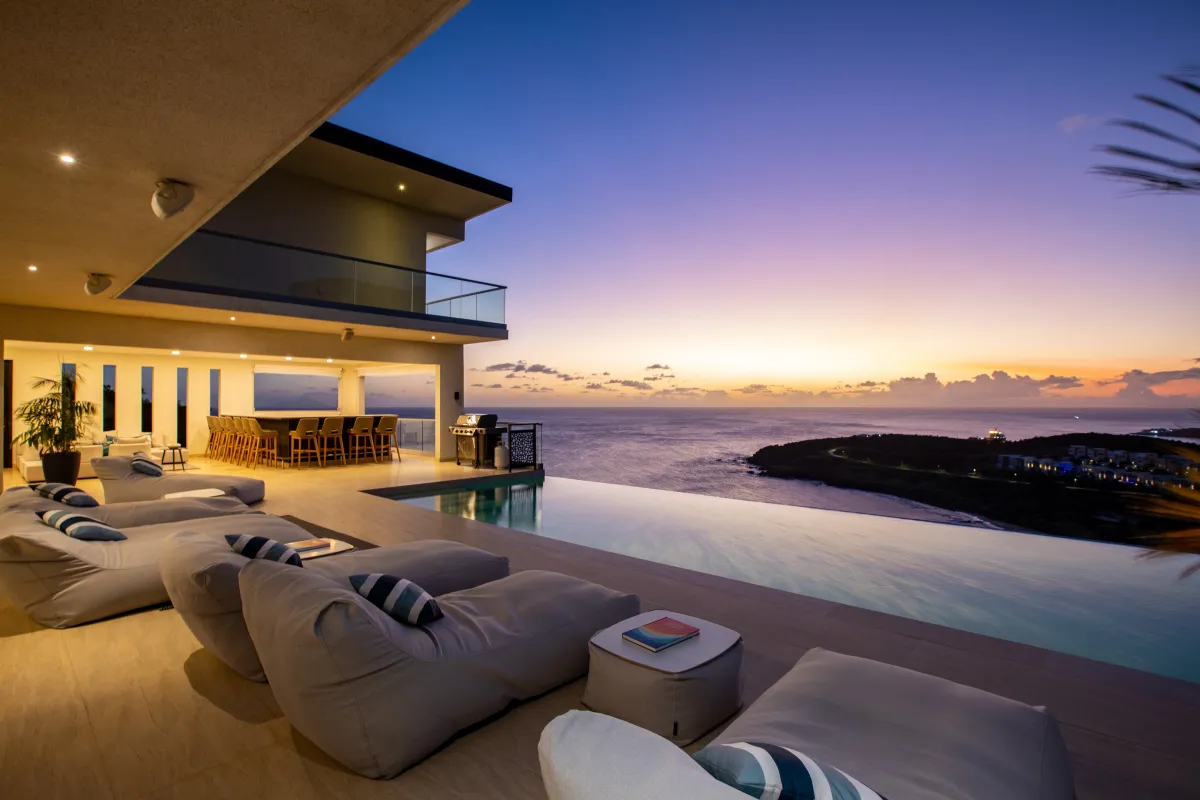
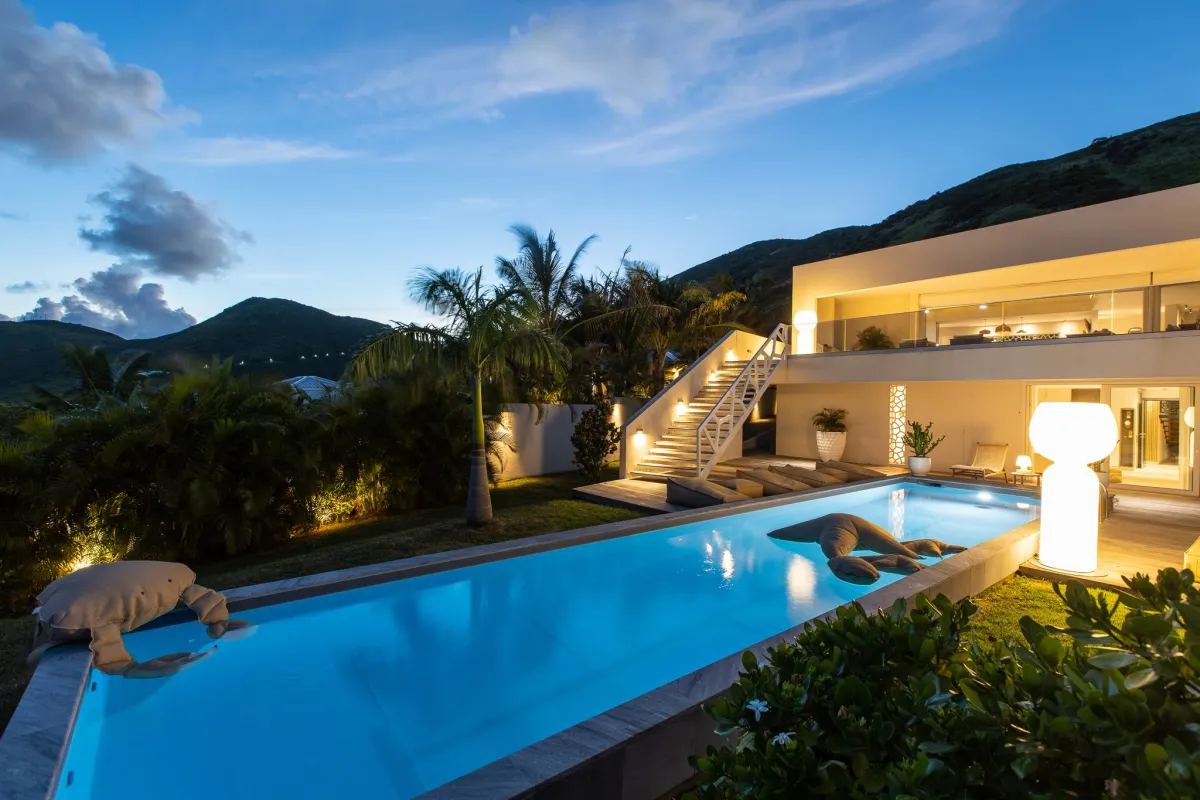
Indigo Bay
A gated estate of newer villas on the Dutch south-west coast, above a small private beach and close to Philipsburg.
4 villas, 15 min to the airport
French side
Cul de Sac
A hillside village on the north-east coast where the boats leave for Pinel Island, with views toward St Barths.
4 villas
Dutch side
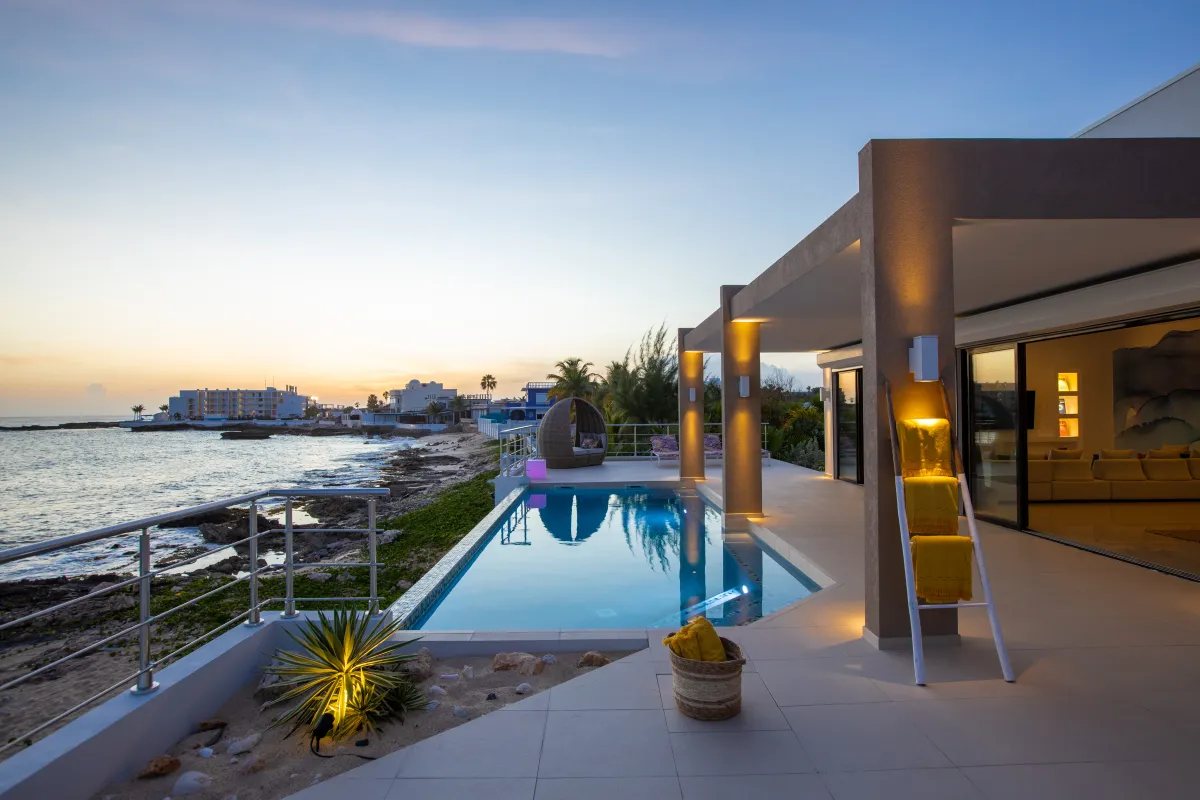
Beacon Hill
A quiet headland on the Dutch side, minutes from the airport, Maho and the Simpson Bay restaurants.
3 villas, 4 min to the airport
French side
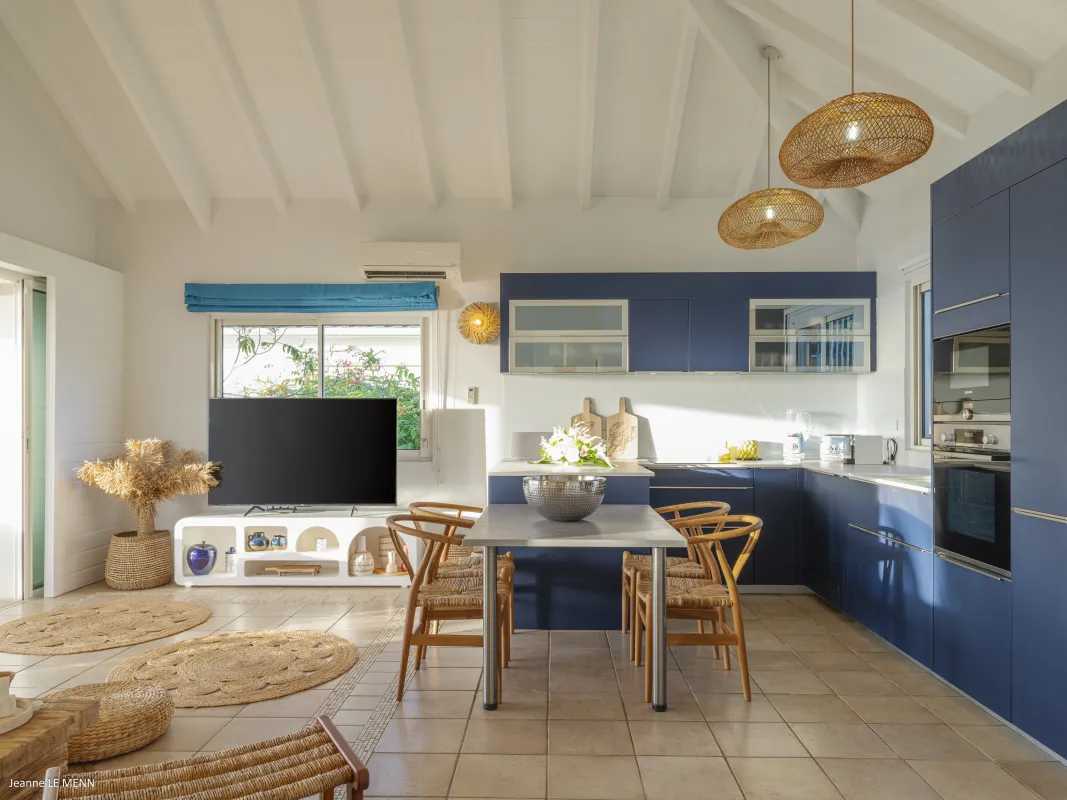
Happy Bay
Green hills above one of the island's quietest beaches, reached on foot, a few minutes from Grand Case.
3 villas
When to go

High season runs from mid-December to mid-April. Daytime temperatures sit in the low to mid 80s, the air is drier and the trade winds keep evenings comfortable. It is also the busiest and most expensive stretch, and the Christmas and New Year weeks book first, so plan those eight to twelve months ahead if you want a choice of villas.
May, June and November are quieter and better value. The weather is still settled, with short showers now and then, and restaurants are open. Across our villas, low-season weeks cost about 25 percent less than the same villa in high season.
The Atlantic hurricane season officially runs from June 1 to November 30, with most activity between mid-August and mid-October. Most weeks pass without incident and storms are forecast days in advance, but if you travel in those months, book flexible flights and take travel insurance that covers cancellation.
July and August suit families on summer break: warm sea, long days and lower rates. December 26 to January 6 is the liveliest fortnight of the year.
Beaches and days out

The island has more than thirty beaches in about 34 square miles, and they differ more than you would expect. Mullet Bay on the Dutch side is the swimming beach locals point you to: long, gently sloping and calm in the morning. Maho is the famous one, with aircraft landing just overhead; go once. Orient Bay on the French side is the long Atlantic beach with the beach clubs, water sports and lunch on the sand.
For a quieter day, the three beaches of the Terres Basses peninsula, Baie Rouge, Plum Bay and Baie Longue, are usually uncrowded even in February. Cupecoy has sandstone cliffs and small coves that are best at sunset. Guana Bay and Dawn Beach face the Atlantic, with surf, fewer people and morning sun.
Off the beach, the week tends to revolve around food and water. Grand Case, often called the gourmet capital of the Caribbean, has a long row of restaurants on its beachfront street. Marigot has its waterfront and a market on Wednesday and Saturday mornings; Philipsburg has Front Street and the cruise port. The ferry from Marigot to Anguilla takes about 25 minutes, and ferries to St Barths take roughly 45 to 75 minutes depending on the boat and the sea, so both work as day trips.
Getting around

A rental car is the easiest way to get around from a villa. The island is compact, you can drive end to end in under an hour without traffic, and most villa weeks include a few dinners out, beach runs and grocery stops. Driving is on the right on both sides, and a small SUV copes better with the steeper villa driveways than a sedan.
Taxis wait at the airport, in Philipsburg and at the larger hotels, and the airport posts its fixed fares; at private villas you will usually call ahead. There is no Uber or Lyft on the island, so ask us to book rides you know you will need.
Princess Juliana International Airport (SXM), on the Dutch side, has nonstop flights from several US cities on the East Coast, including New York, Miami, Atlanta, Boston and Charlotte, as well as from Toronto, Amsterdam and Paris. Smaller planes to nearby islands use SXM or Grand Case airport on the French side.
We can schedule a private transfer from the airport and arrange a rental car delivered to the villa, so you skip the rental counters on arrival. Both are quoted before you confirm.
Money, tipping and practical tips

The Dutch side's official currency is the Caribbean guilder, which replaced the Antillean guilder in 2025, but US dollars are used everywhere. The French side uses euros, and most restaurants and shops also take dollars. Cards are accepted at sit-down restaurants and larger shops; carry some cash for beach bars, markets and taxis. ATMs are easy to find in Philipsburg, Simpson Bay and Marigot.
Restaurants on the Dutch side usually leave the tip to you, and 15 to 20 percent is normal. On the French side service is often included (look for "service compris" on the bill), with a little extra for good service. A tip for the villa's housekeeping team at the end of the stay is customary.
Electricity is 110V on the Dutch side, where US plugs fit, and 220V on the French side, where you need an adapter for US devices. Tap water on the Dutch side is desalinated; many visitors still drink bottled water. Mosquitoes are more active after rain, so pack repellent.
As on any island, keep valuables out of sight in parked cars and lock the villa when you go out. Terres Basses and Indigo Bay are gated communities; ask us about the setup of any villa you are considering.
A few villas on Sint Maarten
Indigo Bay, Dutch side
Villa Numa
6 bedrooms, 12 guests, 6 baths
From $9,772 / week
Terres Basses, French side
Villa C'est la Vie
6 bedrooms, 12 guests, 6 baths
From $39,004 / week
Beacon Hill, Dutch side
Villa Alma
4 bedrooms, 8 guests, 4 baths
From $8,400 / week
Orient Bay, French side
Villa Karukera
4 bedrooms, 8 guests, 4 baths
From $6,825 / week
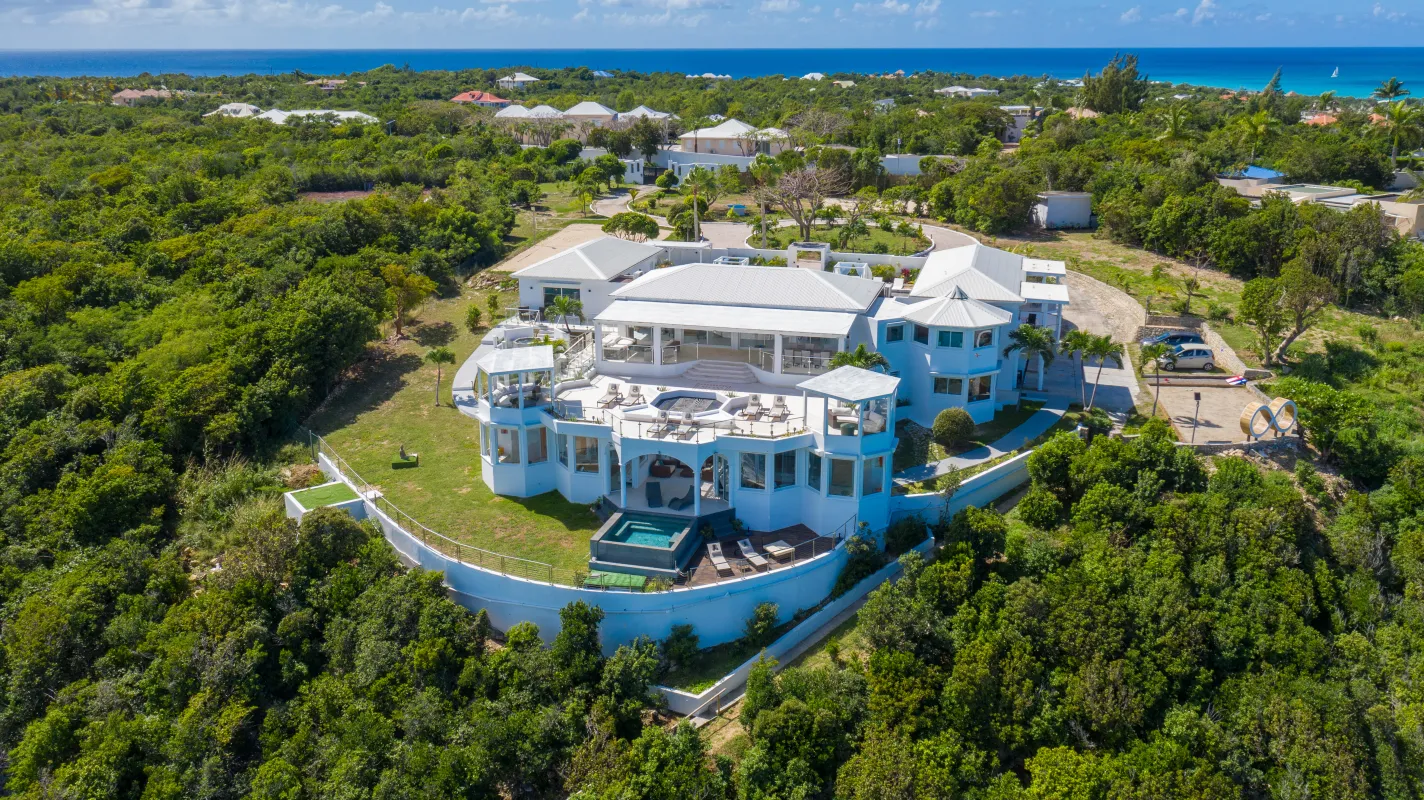
Terres Basses, French side
Villa Infinity Blue
6 bedrooms, 12 guests, 6 baths
From $13,860 / week
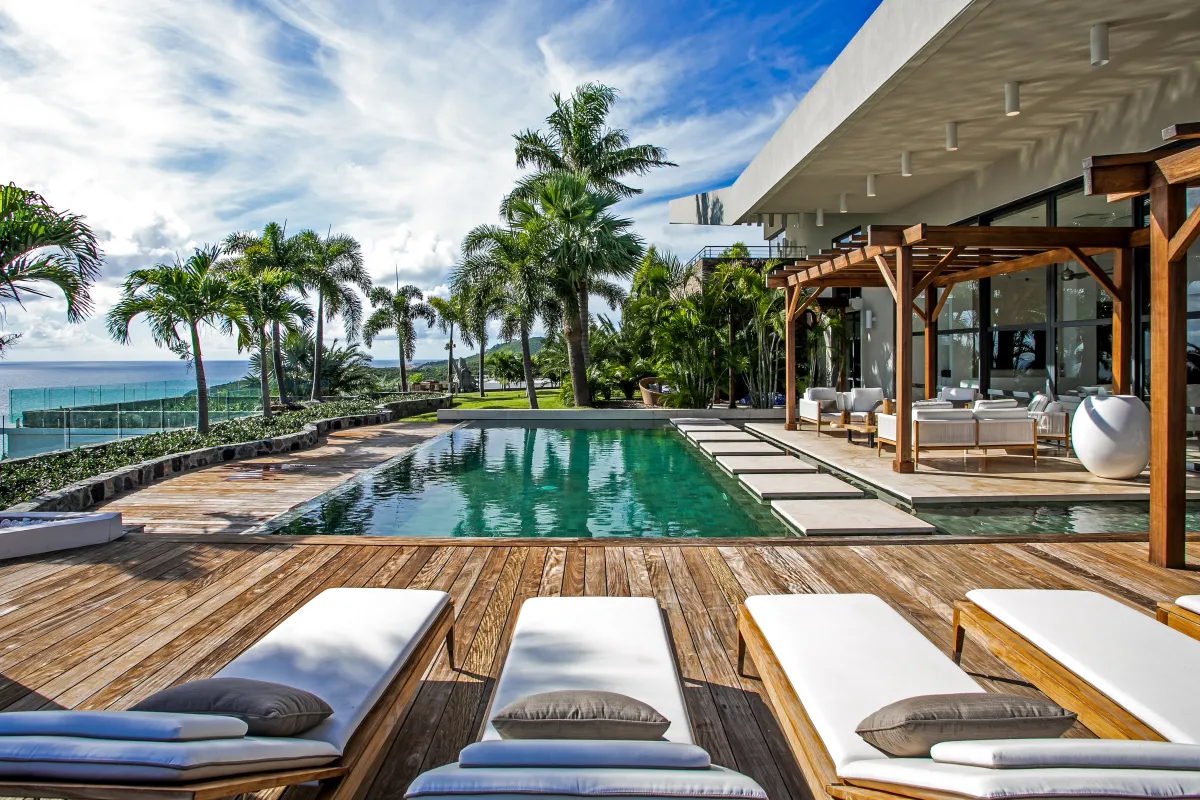
Indigo Bay, Dutch side
Villa Emeraude
4 bedrooms, 8 guests, 4 baths
From $10,500 / week
Questions
Planning a trip to Sint Maarten
The questions first-time visitors ask us most.
Are Sint Maarten and St Martin the same island?
Which side of the island is better to stay on?
How many nights should we plan for?
Do US citizens need a passport to visit St Maarten?
What currency is used on St Maarten and St Martin?
More island guides

Best Restaurants in St Maarten: Where We Actually Send Guests
The best restaurants in St Maarten, from Grand Case fine dining to lolo barbecue and Simpson Bay seafood. The places we book for our villa guests, wit...

Things to Do in Philipsburg, St Maarten: Complete Guide (2026)
Everything worth your time in Philipsburg, St Maarten: duty-free shopping on Front Street, the boardwalk along Great Bay, guavaberry tasting, Fort Ams...

Things to Do in St Maarten: 15 Best Experiences (2026 Guide)
The 15 best things to do in St Maarten, from plane-spotting at Maho Beach to lolo barbecue in Grand Case and snorkeling off Pinel Island. Practical pi...